
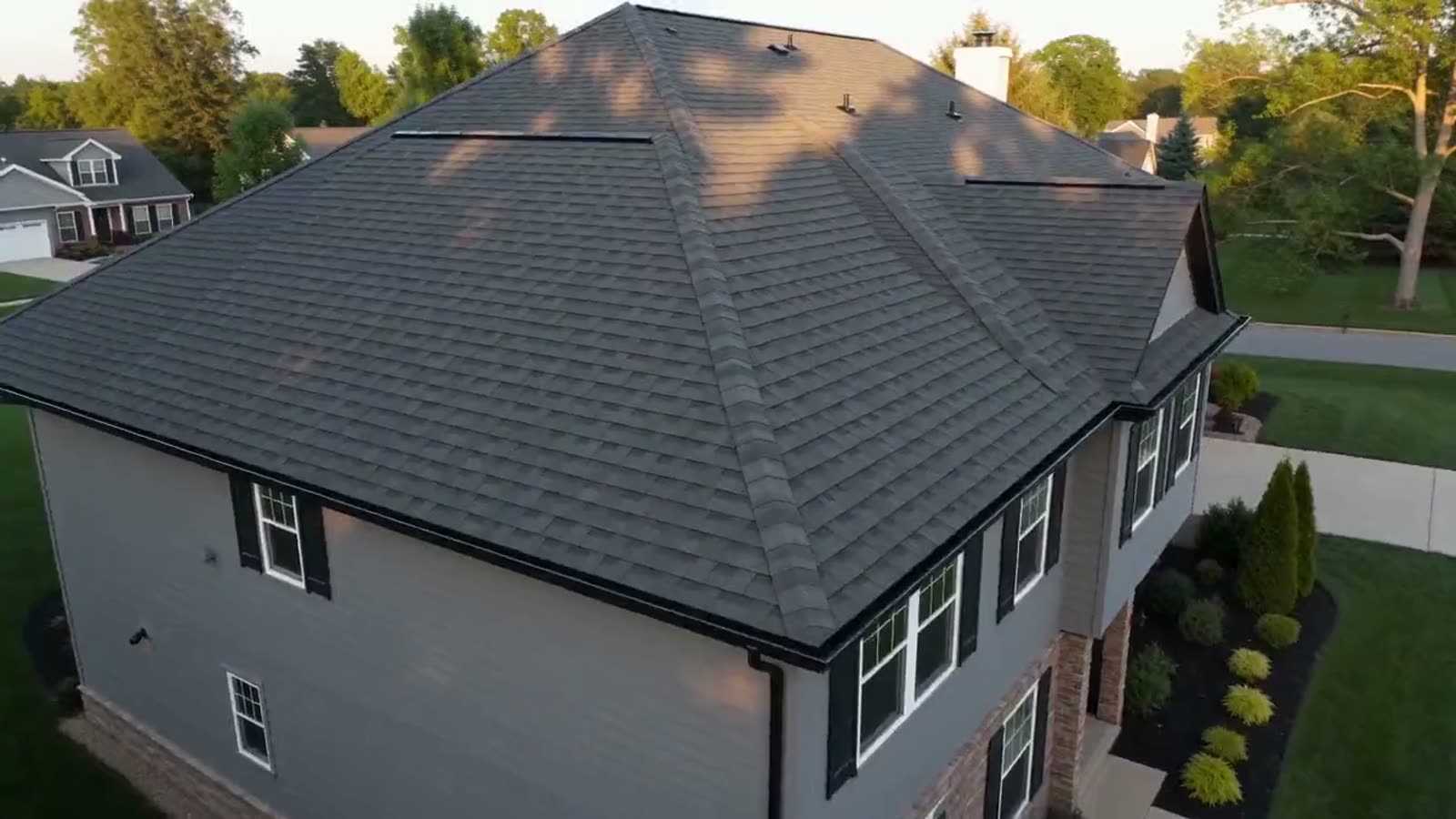
Historic Home Roofing in Franklin Park, PA
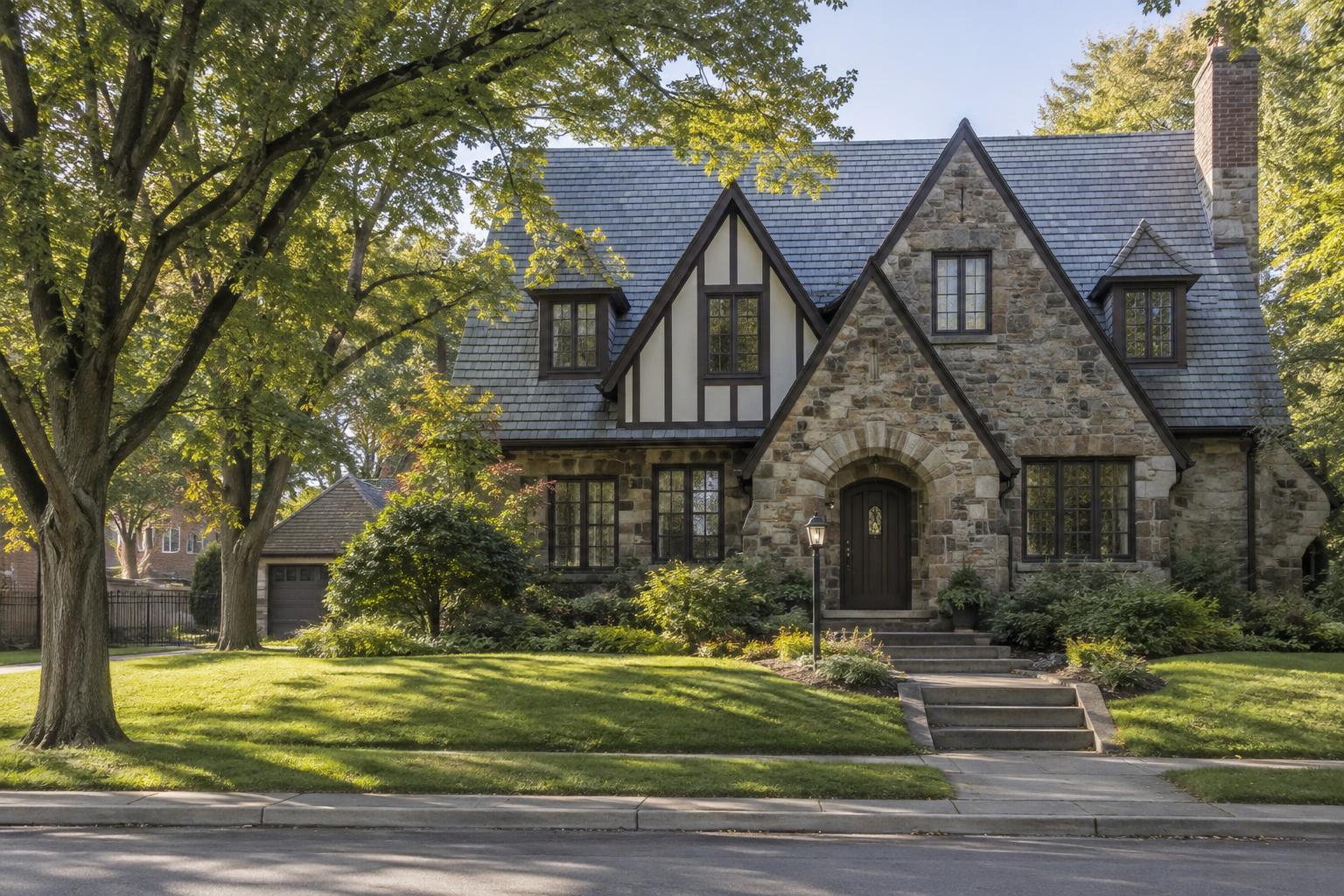
Blackburn Heights's housing stock is old, and much of it is architecturally serious. Victorians and Four Squares packed onto narrow lots off Blackburn Heights, Tudor Revivals with steep cross-gables, and Colonial Revival estates along Beaver Road in Fox Chapel side / Franklin Park Hills border were built by people who cared about proportion and detail. A roof that ignores that — the wrong shingle profile, exposed fasteners where there should be none, flashing that reads as a patch from the sidewalk — devalues the house even when it technically doesn't leak.
Book Your
Roof Check
Free inspection · Written scope · No pressure.
Long private driveways change how we work in Franklin Park. We stage material with a conveyor or boom rather than dropping bundles at the road, protect the drive surface, and plan dumpster placement around septic fields and landscaping. It's slower, but it keeps the property intact.
Big Dog Roofs treats historic roofing as its own discipline, not a smaller version of standard replacement. That means understanding what's actually on the roof before proposing what goes back on it: original slate, clay tile, standing seam metal, wood shake remnants under later layers, or an asphalt roof installed decades ago over a house that never should have had one. It means matching profile and color when a full replacement is unavoidable, and it means knowing when repair and restoration protect the house's value better than any replacement would.
Big Dog Roofs handles historic home roofing across every Franklin Park neighborhood — Blackburn Heights, Fox Chapel side / Sewickley Hills border, Nicholson Road corridor, Rochester Road area, Ingomar Heights and the rest of 15143 and 15090 and 15237 in Allegheny County. We also work nearby in Wexford, McCandless, Cranberry Township, so our crews are in this part of the county every week rather than driving in for one job.
What's Included
- Material-appropriate roofing for pre-1950 homes
- Slate, tile, wood shake and standing seam experience
- Historic district review coordination
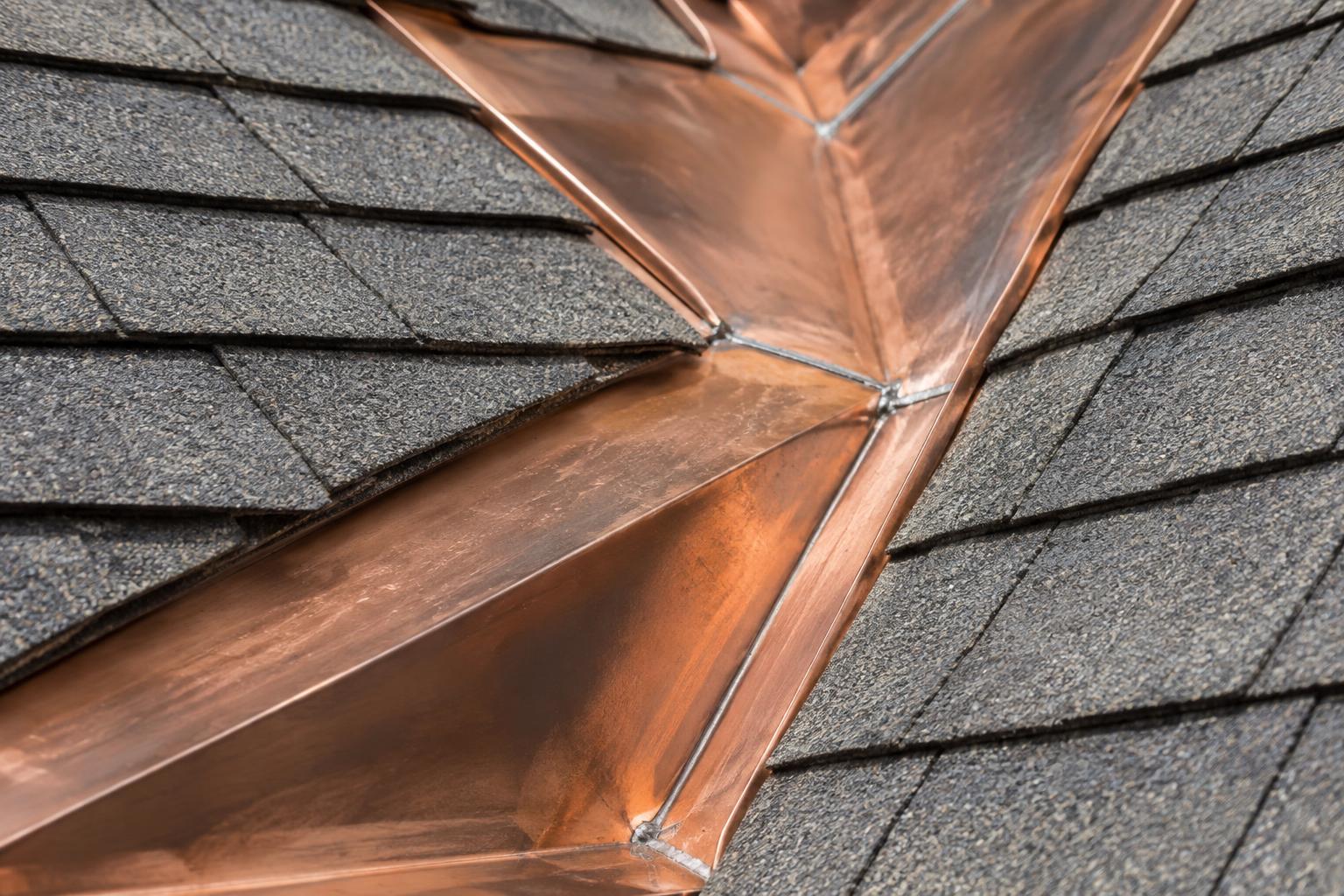
- Soldered copper flashing, valleys and pans
- Matched profile & color on visible replacement work
- Plank decking assessment & repair
- Chimney, turret and dormer detailing
- In-kind repair over full replacement when it's the right call
- Written condition reports with photos
- Permit handling with your specific municipality
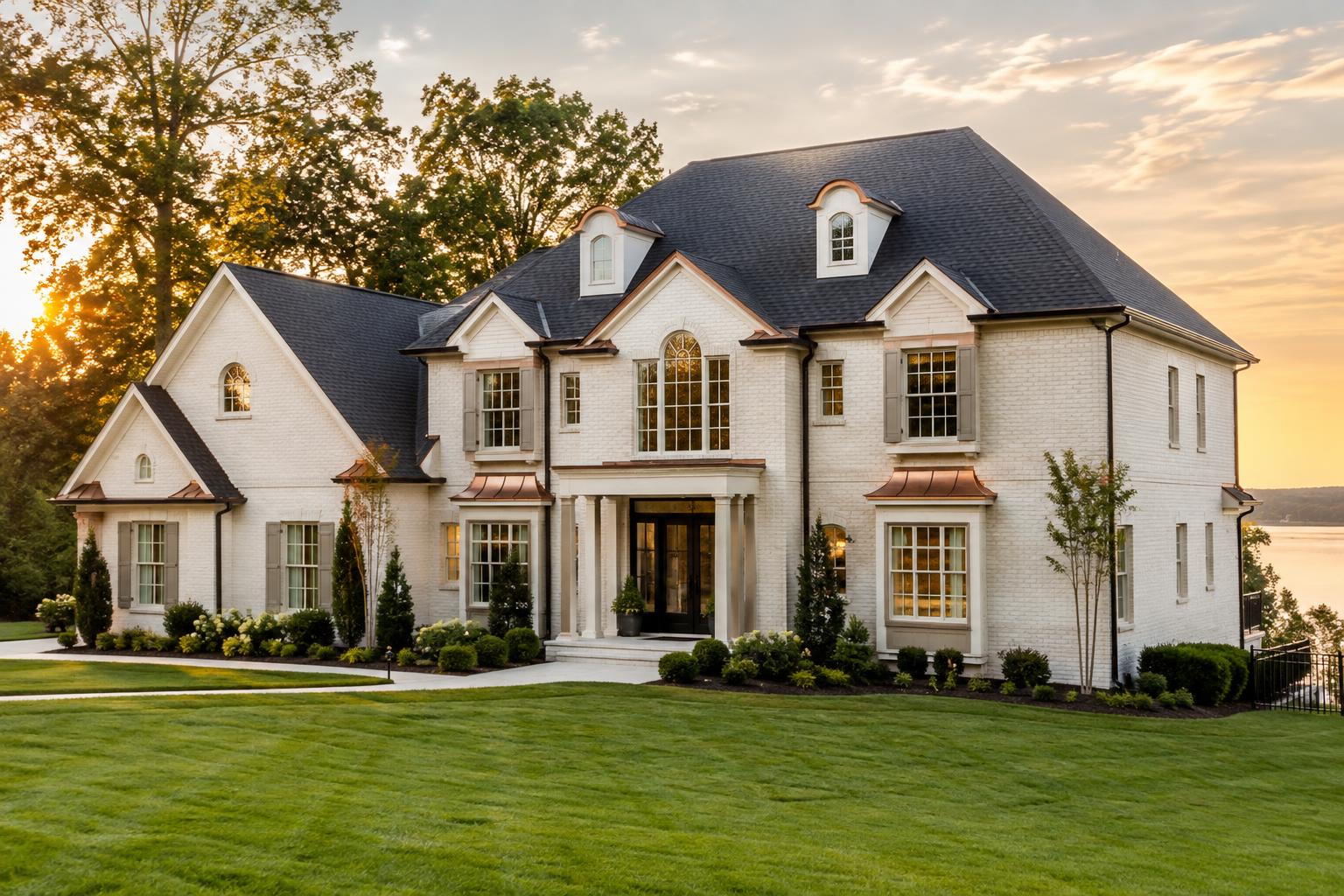
What Makes a Historic Franklin Park Roof Different
A house built in 1895 was framed, decked and roofed with materials and methods that a modern crew doesn't necessarily default to. Rafters may be undersized by today's span tables but have carried the load for a century because the original roofing was light and the ventilation was passive. Plank decking with gaps between boards behaves differently under synthetic underlayment than the solid OSB decks crews are used to. None of that is a problem until someone treats the house like a 2005 build and gets surprised on the deck.
Detail work matters more too. Historic Franklin Park homes tend to have more roof intersections per square foot than newer construction — turrets, dormers, cross-gables, bay windows with their own small hip roofs, porches tucked under the main roofline. Every one of those intersections is a flashing decision, and on these houses the flashing was very often built in copper because that's what the trades used before modern sealants existed. Replacing it with anything less is a downgrade the house will eventually show you.
Curb appeal is not a soft consideration on these properties either. Buyers, neighbors and, on reviewed properties, the borough itself notice shingle color, profile and how a valley or ridge reads from the street. We plan for that from the first estimate, not as an afterthought once the material is already on the truck.
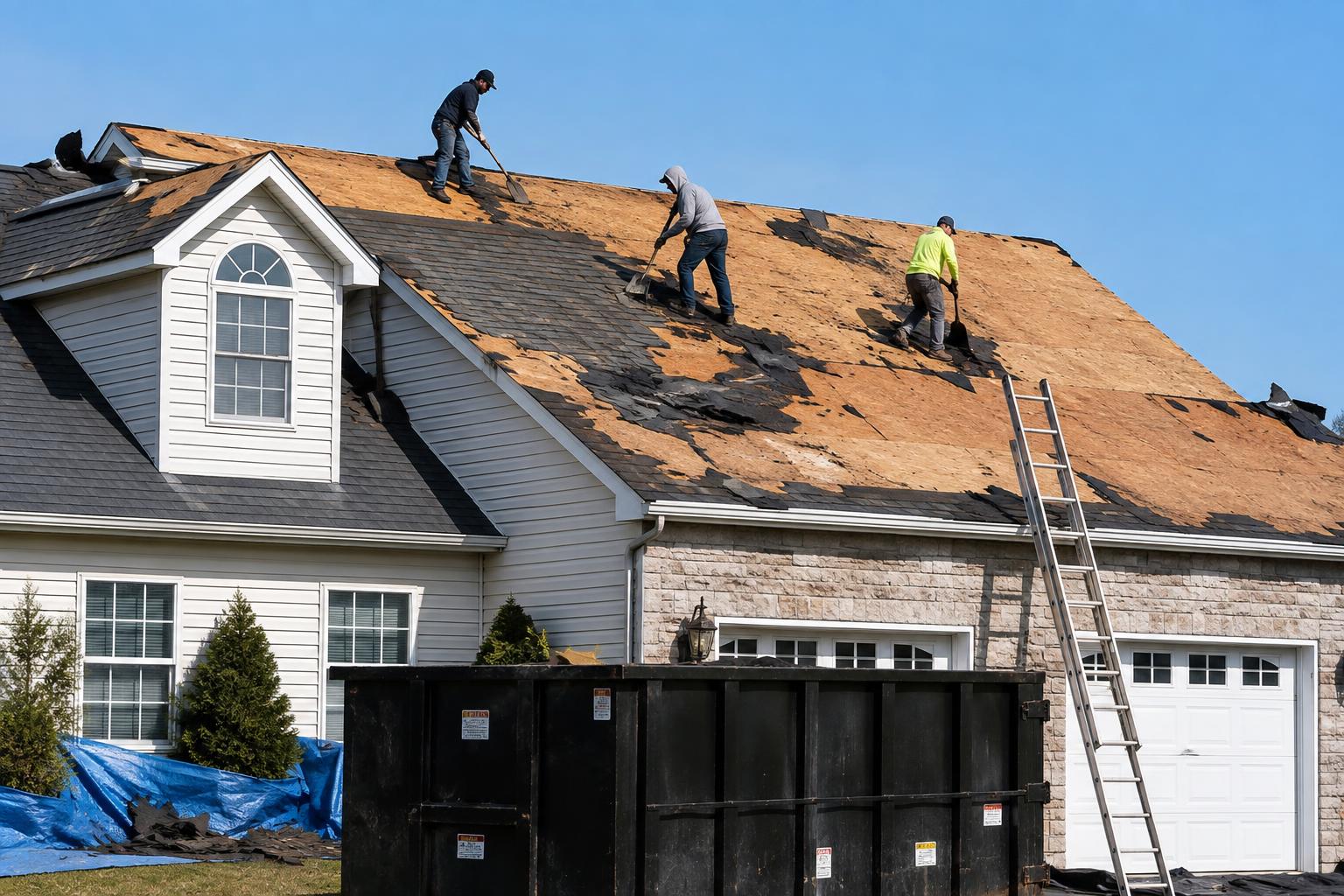
Roofing the Victorians and Four Squares of Blackburn Heights
The village lots along and near Blackburn Heights carry the highest concentration of pre-1930 housing in Franklin Park — steep, narrow, often three stories with a full attic, and frequently still wearing original slate or an asphalt roof installed over it decades ago. Tight side yards make staging and tear-off the genuinely hard part of the job here, not the roofing itself, so we plan dumpster placement and material hoisting before we ever put a number on paper.
Where the original roof is asphalt over what used to be slate, we open up the deck to see what's actually underneath before quoting a straight reroof. It is not unusual to find old slate nail holes, undersized rafters, or plank decking that needs selective replacement rather than a full new deck. Each of those changes the scope, and we'd rather find them on assessment than mid-tear-off.
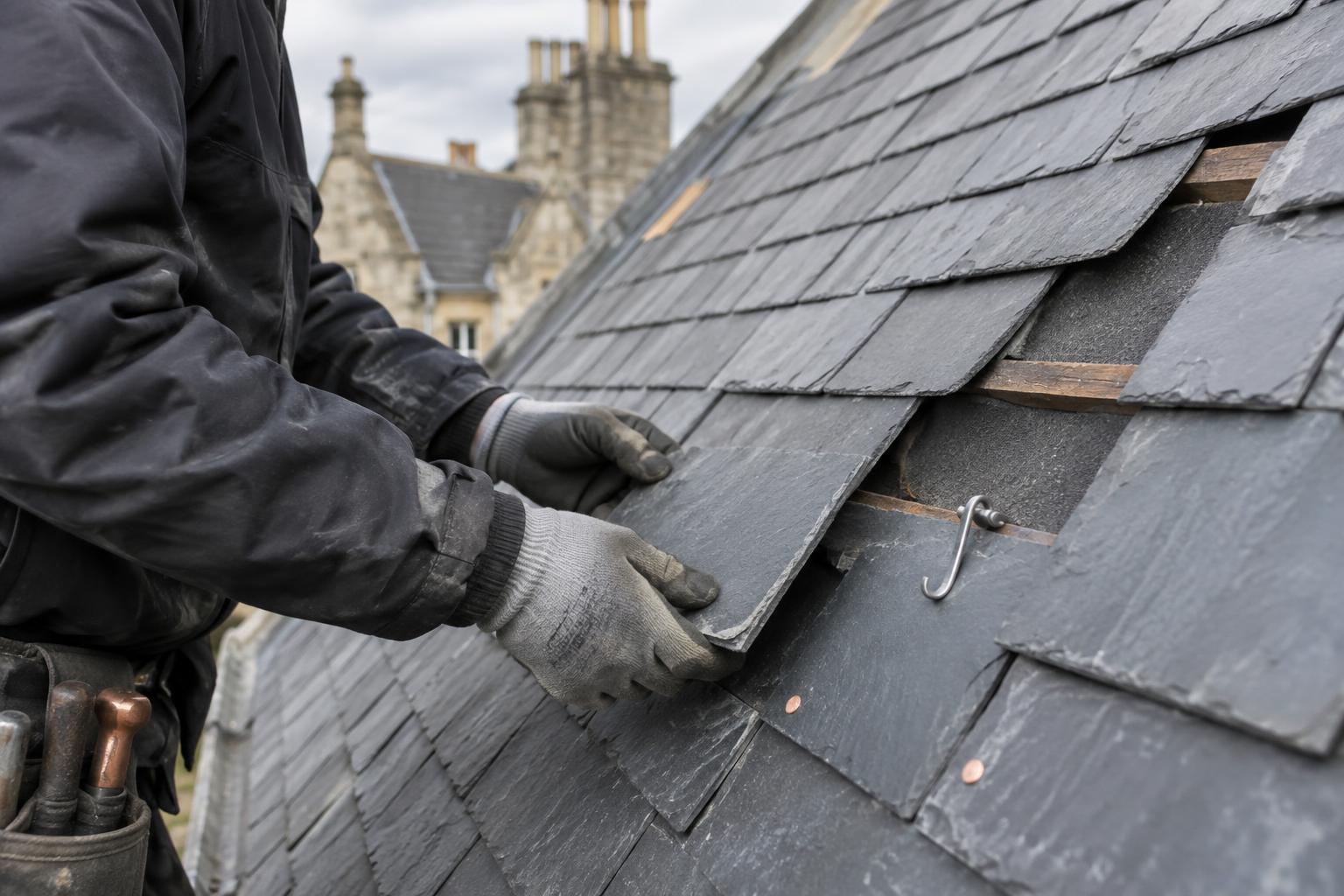
Where original slate or tile survives, replacement is rarely the answer — see our slate repair work for that conversation. Where a prior owner already converted to asphalt, our job is choosing a profile and color that reads honestly from the street rather than looking like a big-box shingle dropped on a century-old form.
Fox Chapel side / Franklin Park Hills border and Blackburn Heights: Larger, More Complex Rooflines
Fox Chapel side / Franklin Park Hills border's grand older homes along Beaver Road and the estate properties in Blackburn Heights present a different problem: scale. Multiple wings, long copper valleys, standing seam porch roofs tied into a slate or shingle field, and enough roof plane that a small detailing mistake shows up as a much bigger leak than it would on a village cottage.
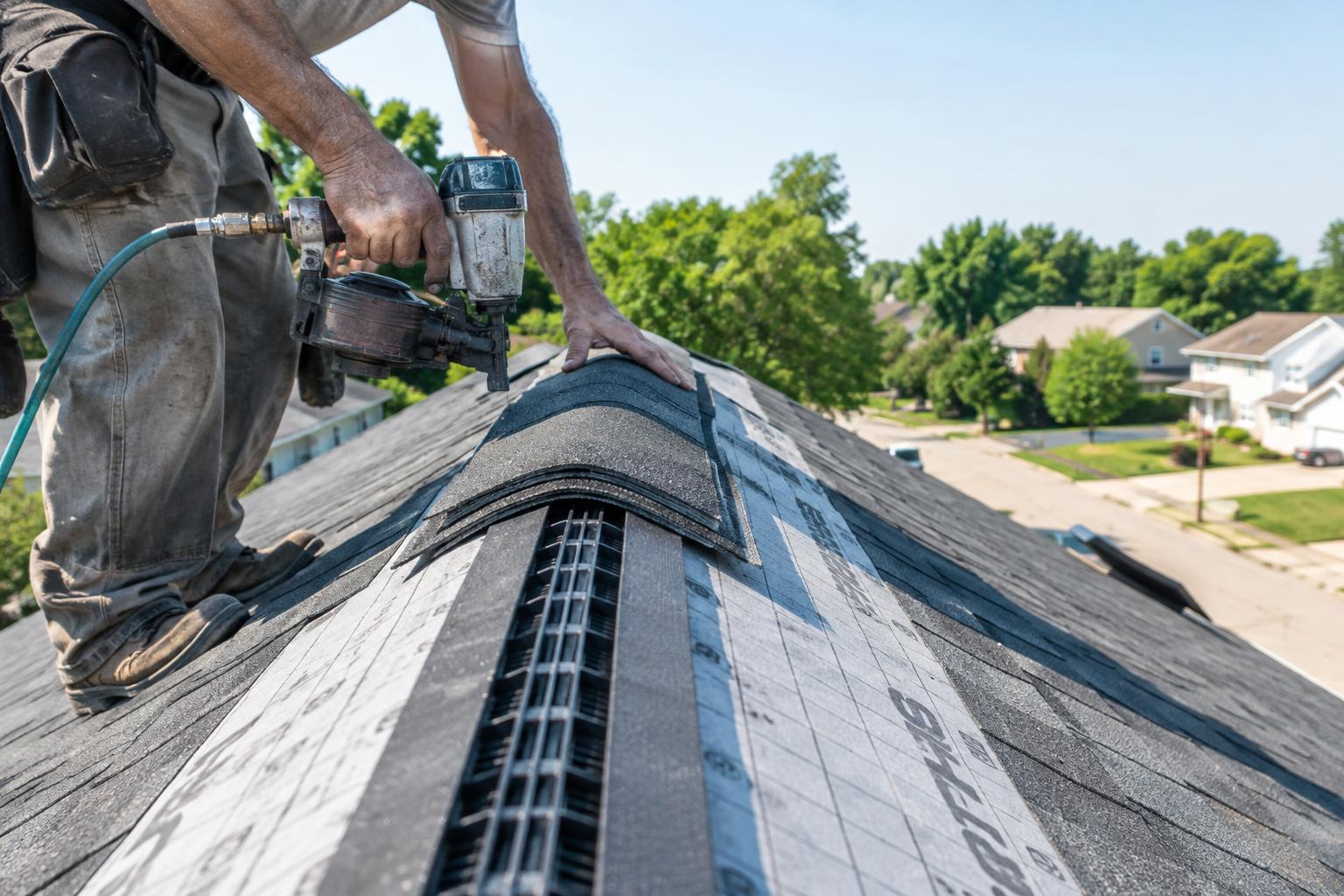
Blackburn Heights also carries real wind exposure on its ridge that the sheltered borough never sees. On historic homes up there we upgrade ridge and hip fastening, use engineered snow guard placement rather than a decorative scattering, and plan staging around long private drives and mature landscaping — protecting the grounds is part of the job, not an afterthought.
These properties are also where the cost of getting flashing wrong compounds fastest, because the copper and slate that built them were expensive materials chosen to last a century. Replacing that work with anything less than in-kind materials on a visible slope is a decision worth discussing before it's made for you by a lower bid.
Historic District Review in Blackburn Heights and Fox Chapel side / Franklin Park Hills border
Properties in and around the older core of Blackburn Heights can face review of visible exterior changes, including roofing material and color, and the process is not identical across every municipality in Franklin Park. We confirm the current requirements with your specific municipality for your specific address before ordering material, rather than assuming what applied to a neighbor's house also applies to yours.
In practice, in-kind repair and restoration are the smoothest path on a reviewed property because you're keeping the material the house was built with — one more reason we push assessment before a replacement quote. When replacement is genuinely necessary, we help select a compliant profile and color and handle the permit process as part of the job.
Choosing Materials That Belong on an Old Franklin Park House
Natural slate and standing seam copper remain the gold standard for visible historic roofs, and where either survives in repairable condition, we push hard to keep it — the cost math and the value math both favor restoration over replacement in most cases. Where slate must be replaced on a non-reviewed slope or budget rules out the natural material, synthetic slate gives a reasonable profile at roughly half the weight and a fraction of the cost.
For homes already converted to asphalt, architectural shingles in a color and shadow line that reads appropriately from the street are the honest, affordable option, and we'll say so plainly rather than pushing a more expensive system a given house doesn't need. What we won't do is quote a full slate or copper replacement on a house where a well-detailed asphalt roof already serves the owner and the street just fine.
What We See on Franklin Park Roofs
Franklin Park is not a generic roofing market, and we do not quote it like one. Cedar Shake Conversions: Skip-sheathing decked over solid before the new system is installed. Long-Driveway Staging: Conveyor or boom loading, drive protection and septic-aware dumpster placement. Canopy-Ready Spec: Algae-resistant shingles plus oversized guarded gutters for heavy leaf load.
Those conditions change how we spec historic home roofing here. Fastening patterns, underlayment, flashing metal, ventilation: all of it gets picked for this housing stock instead of copied off a template. A few local landmarks show you why. Blueberry Hill Park: The borough park at the center of Franklin Park's wooded neighborhoods. Linbrook Park: Local greenspace surrounded by custom homes. North Allegheny School District: The district covering the borough's residential core.
Because we run crews through Blackburn Heights, Fox Chapel side / Sewickley Hills border, Nicholson Road corridor, Rochester Road area and the surrounding Allegheny County communities constantly, we already know which streets have plank decking, which plans have chronic valley problems, and which roofs were re-shingled over a failing layer instead of torn off.
Straight talkWe'd rather spend a morning in your attic finding the real leak than sell you a roof you don't need.
How We Do It In Franklin Park
On-Roof & Attic Assessment
We inspect the existing roofing, decking and framing from both the roof and the attic, and document age, material and condition with photos before recommending anything.
Historic Review Check
If your address falls near the older core of Blackburn Heights, we confirm the current review process with your municipality before material is selected or ordered.
Written Scope & Options
You get a written recommendation — repair, restoration or replacement — with photos, material options and honest pricing, not a verbal ballpark on the driveway.
Material Sourcing & Matching
For visible or reviewed slopes, we source matched profile, color and thickness before work begins so the finished roof doesn't read as a patch from the street.
Careful Work on Old Decking
Plank decking gets assessed and repaired board by board where needed, not blanket-replaced, and framing concerns get flagged before they become surprises.
Copper Flashing & Cleanup
Valleys, chimneys and penetrations get soldered copper where the house calls for it, followed by full cleanup and photo documentation of the finished work.
Materials & Options
Natural Slate
The original roofing material on much of pre-1930 Franklin Park. Restored and repaired wherever possible rather than removed.
Synthetic Slate
A lighter, less expensive alternative when natural slate isn't practical for framing, budget or availability reasons.
Standing Seam Metal
Original on some historic porches and low-slope sections, and a durable, appropriate choice for additions on older homes.
16–20 oz Copper Flashing
Valleys, chimney pans and step flashing, soldered rather than sealed — what these houses were built with and what belongs on them.
Architectural Asphalt Shingles
The honest, affordable choice for homes already converted from their original material, in a color and profile that reads appropriately from the street.
Ice & Water Membrane
Carried well past code minimum at eaves and valleys, which matters more on shaded, older Franklin Park roofs than most homeowners expect.
What It Costs In Franklin Park, PA
Real ranges, published up front. Your written quote is exact — these are the bands Franklin Park work actually lands in.
| Scope | Typical Range | Notes |
|---|
- Whether your address falls under the older core of Blackburn Heights review, which can affect material options.
- Original roofing material — slate and copper cost more to restore but often less than full replacement.
- Plank decking condition, which drives selective repair versus full deck replacement.
- Roofline complexity: turrets, dormers, bays and cross-gables all add flashing work.
- Access on narrow village lots off Blackburn Heights versus long private drives in Blackburn Heights.
- Whether prior work already converted the house away from its original material.
Historic Home Roofing FAQs
Does my house need to match a historic material even if it isn't slate anymore?
Not necessarily. If a prior owner already converted your roof to asphalt, we generally recommend staying with an appropriate asphalt profile rather than restoring a material the house no longer has, unless historic review requires otherwise. We'll confirm what applies to your specific address before recommending anything.
How do I know if my home is subject to the older core of Blackburn Heights review?
Check with Blackburn Heights directly, since review generally applies to properties in and around the designated district and can affect exterior changes including roofing. We confirm the current process for your specific address before ordering material rather than assuming, and we handle the permit process once requirements are clear.
Can original decking on a 100-year-old Franklin Park home be reused?
Often, yes. Plank decking that's structurally sound can carry new roofing once gaps and soft spots are addressed board by board. We inspect from the attic and the roof before recommending full replacement, since a blanket new deck is rarely necessary and adds cost the house doesn't need.
What's the difference between historic home roofing and standard roof replacement?
Historic roofing accounts for original materials, period-appropriate detailing, and often a review process that standard replacement doesn't involve. It also means working carefully with older framing and decking rather than assuming modern construction underneath. The roofing itself may use the same materials, but the assessment and decisions leading up to it are different.
Will a new roof hurt my historic home's value?
Only if it's done wrong. Removing sound original slate or copper for asphalt, or installing a shingle profile that doesn't suit the house, can measurably hurt value and buyer interest in this market. Restoring or matching original materials, or choosing an appropriate replacement when the original is already gone, protects it instead.
Do you handle permits for historic home roofing in Franklin Park?
Yes. We confirm current permit and, where applicable, historic review requirements with your municipality before work starts, and we handle the paperwork as part of the job. Requirements differ between Fox Chapel side / Franklin Park Hills border, Nicholson Road corridor, Blackburn Heights and the surrounding townships, so we don't assume based on a neighboring property.
How much does it cost to roof a historic Franklin Park home?
It depends heavily on material: asphalt, synthetic slate, natural slate and copper all price very differently, and roofline complexity and decking condition move the number as much as material choice does. Turrets, dormers, cross-gables and reviewed materials all add cost. We assess the specific house on the roof and give you a written, itemized quote rather than a number over the phone.
Can you replace a cedar shake roof in Franklin Park?
Yes: full strip, solid decking over the old skip-sheathing, then synthetic slate, designer shingle or metal — whatever fits the house.
Will your trucks damage my long driveway?
We plan to avoid it. We stage material with a conveyor or boom, protect the drive, and keep heavy equipment off soft edges and septic fields.
Do you handle tree-fall insurance claims in Franklin Park?
Yes — tarping, a structural assessment, photo documentation, and we can meet your adjuster on site.
Where We Do This Work
Historic Home Roofing across Franklin Park — every neighborhood in the 15143 ZIP. See everything we do in Franklin Park, PA.
Related Franklin Park Services
Get a Free Franklin Park Inspection
We climb it, photograph it, and hand you a written scope. No pressure, no ballpark guesses.