
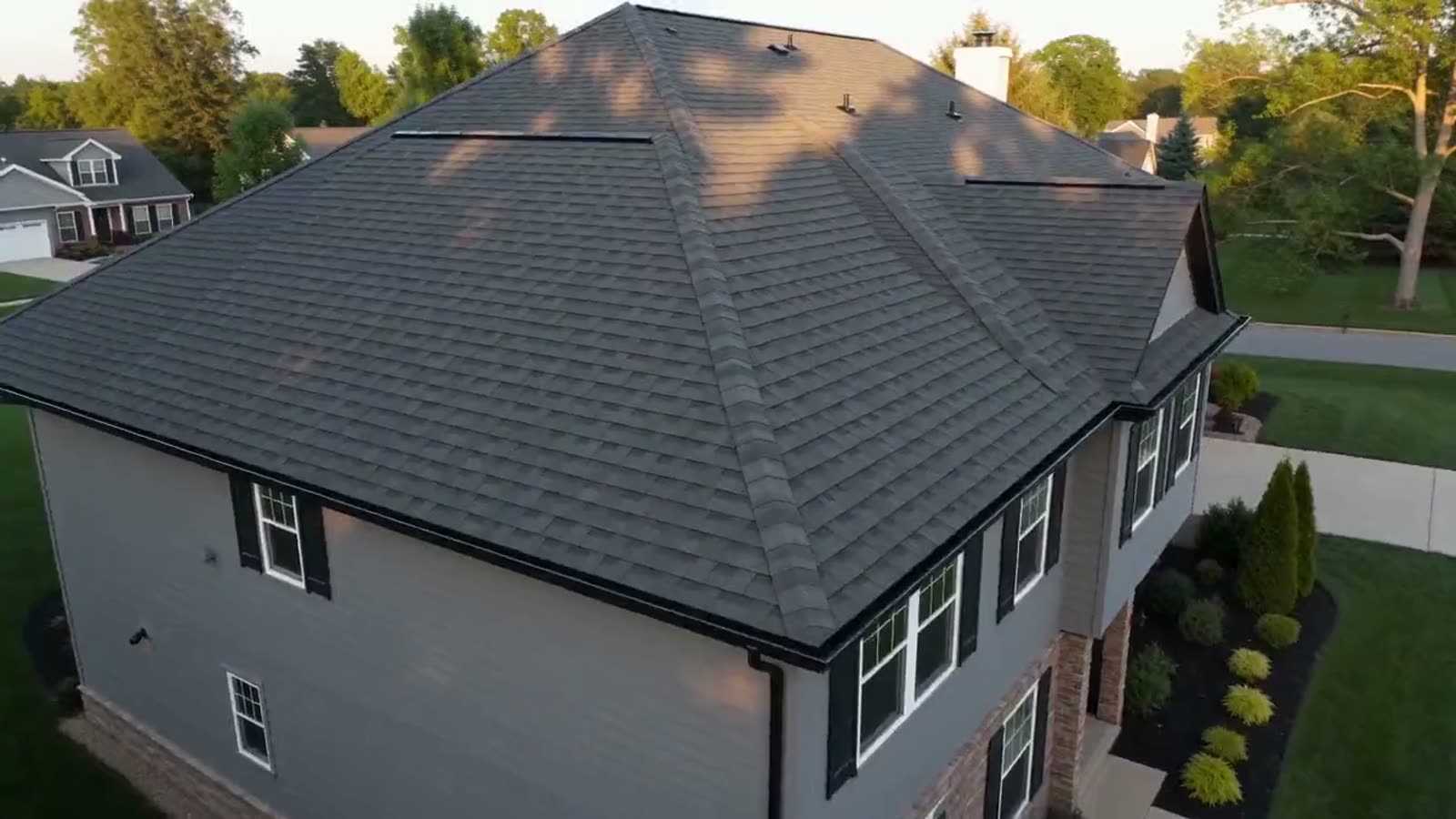
Copper Roofing & Flashing in Cranberry Township, PA
Drive Beaver Road through Whispering Woods or up into Park Place and you'll pass more copper than most towns ever install: bay window roofs, porte-cochere covers, dormer cheeks, chimney pans and valleys that have been quietly shedding water since before either World War. Copper was the standard flashing material for the houses that make up the older core of Cranberry Township, and on most of them it's still doing its job — where it hasn't been patched with something that isn't copper.
Book Your
Roof Check
Free inspection · Written scope · No pressure.
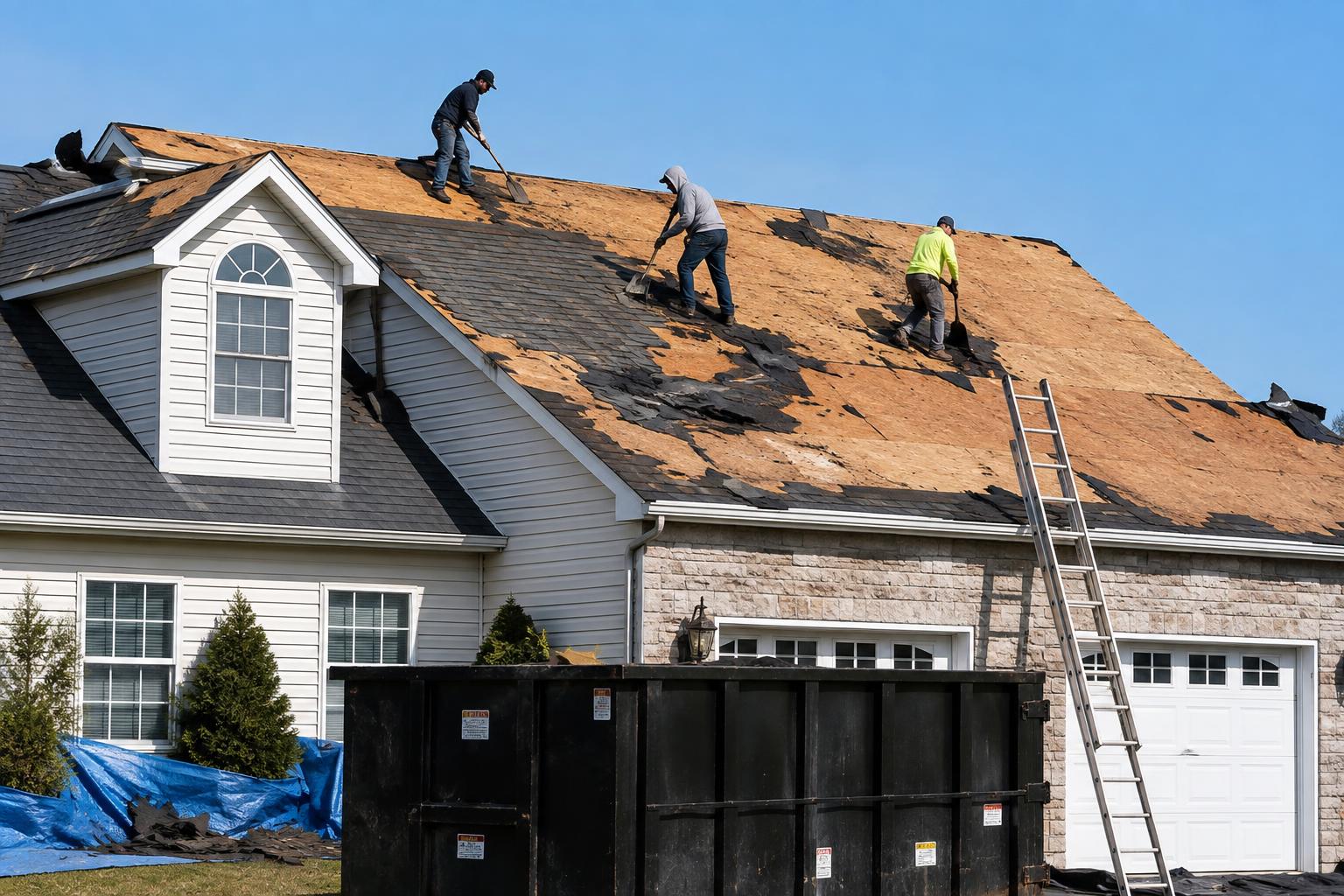
A Cranberry roof replacement is planned around close neighboring homes and active family schedules. We place plywood beneath the dumpster, tarp landscaping and siding, strip one controlled area at a time and make the structure weather-tight each day. Eaves and valleys receive membrane, penetrations receive new flashing components, and the intake and exhaust are calculated together. For storm claims, we document directional damage and collateral hits without promising that an insurer will approve work. That gives the homeowner useful evidence while keeping the repair recommendation based on the roof's actual condition.
The problem we see most often isn't the copper itself. It's what a previous roofer did to it. Sheet metal screws through a soldered pan, roofing cement smeared over a split seam, a valley pinched down onto the slate instead of left with a proper reveal. None of that is copper work, and none of it lasts. Real copper flashing is soldered, not caulked, and it's sized and formed to move with a century of freeze-thaw in this river valley instead of fighting it.
Big Dog Roofs handles copper roofing & flashing across every Cranberry Township neighborhood — Park Place, Whispering Woods, Fox Run, Ehrman Farms, Heritage Creek and the rest of 16066 and 16046 in Butler County. We also work nearby in Wexford, Franklin Park, McCandless, so our crews are in this part of the county every week rather than driving in for one job.
What's Included
- Soldered copper valley fabrication
- Chimney pan & apron flashing
- Bay window & dormer roof copper
- Step flashing woven into slate & shingle
- Cricket saddle fabrication
- Half-round & K-style copper gutters
- Copper downspouts & conductor heads
- Standing seam copper roof sections
- Porch, porte-cochere & turret copper
- Patina matching for repair work
- Copper-to-copper soldered seams only
- Photo documentation of every joint
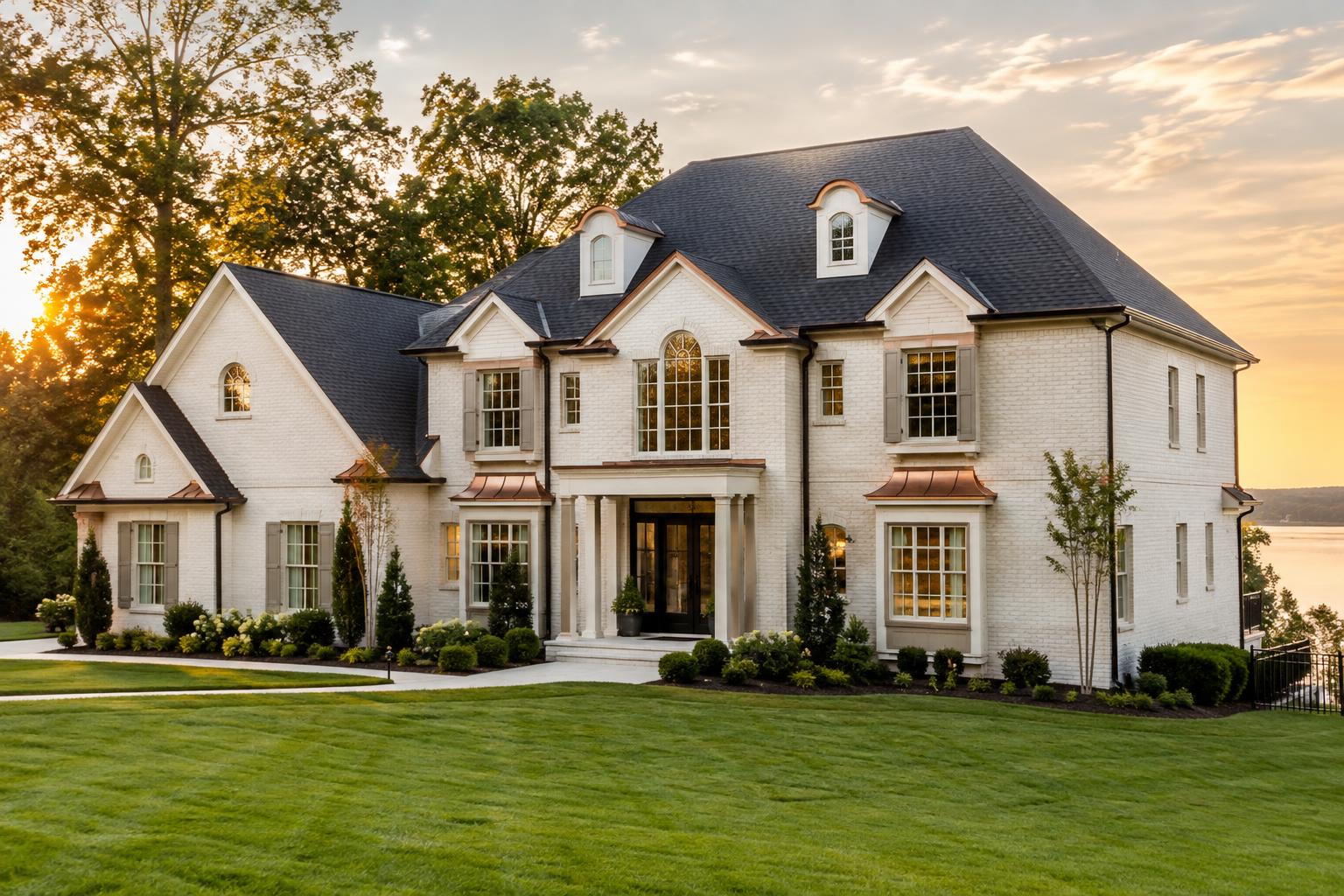
Why Copper Is Still the Right Answer on Cranberry Township's Older Homes
Most homes in Cranberry Township, Whispering Woods and Park Place were built with copper flashing because copper was simply what a quality roof used before galvanized and aluminum became cheap alternatives. It doesn't rust, it outlasts the roofing material around it by decades, and it solders into a genuinely watertight seam instead of relying on a bead of sealant that fails in a few years.
That history matters when you're deciding what to repair a valley or chimney pan with today. Put aluminum flashing next to old copper and you get galvanic corrosion where the two metals touch — a slow, quiet failure that shows up as a stain two or three years later with no obvious cause. The fix is to keep the system in one material. On a copper roof, that means copper, not whatever's on the truck.
It also matters to buyers and appraisers in this market. A Park Place estate or an Whispering Woods Colonial Revival with original copper detailing intact is worth more than the same house with mismatched aluminum patches on the valleys. We treat copper work as part of preserving the house, not just stopping a leak.
Where Copper Fails First: Solder Joints, Not Sheet Metal
Copper sheet itself rarely wears out — a well-formed valley or pan will outlive the roof around it. What fails is the solder joint at a seam, corner or transition, especially where the metal has been stressed by thermal movement for eighty or a hundred winters. Freeze-thaw cycling in the Cranberry Township works those joints loose year after year.
The other common failure point is where someone patched copper with the wrong material. Roofing cement over a cracked seam holds for a season or two, then traps water against the copper and accelerates the corrosion it was meant to stop. Screws driven through a pan to 'secure' it puncture a system that was never supposed to be fastened that way and give water a new path straight through.
Chimney pans take the worst of it because they sit at a low point collecting runoff from the whole stack, and they're often the oldest copper on the house. When a Cranberry Township homeowner calls about a chimney leak, a corroded or improperly patched pan is what we usually find under the mortar cap.
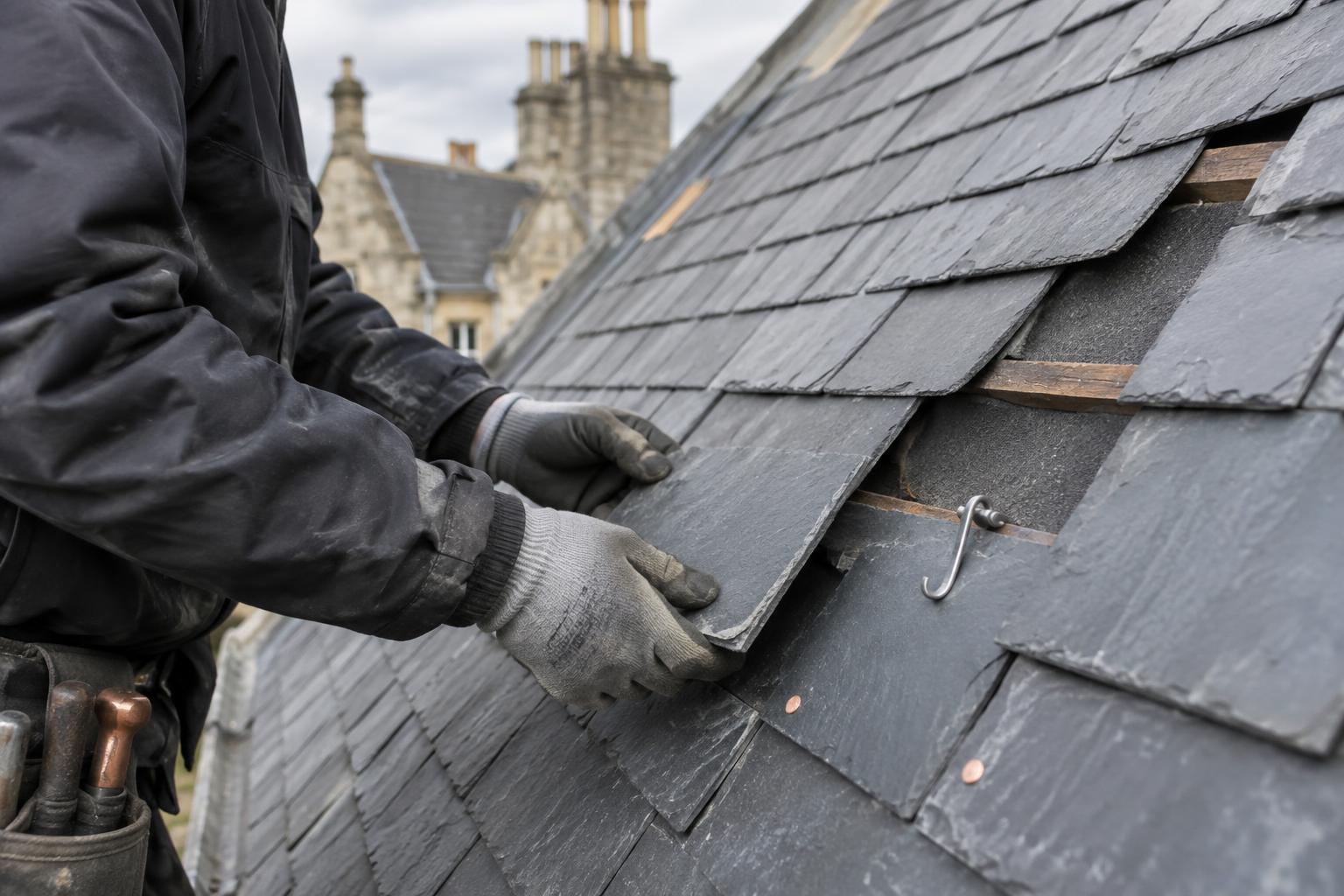
How We Fabricate and Solder Copper
We form valleys, pans, aprons and step flashing on site from 16 oz or 20 oz copper sheet, sized to the actual geometry of your roof rather than a stock profile. Valleys get a proper open reveal so slate or shingle sheds into the metal instead of pinching down on top of it, and every seam that needs to be watertight gets soldered — flux, heat and lead-free solder flowed into a continuous joint, not caulked over a gap.
Step flashing gets woven course by course into slate or shingle at chimneys and sidewalls rather than run as one long bent apron sealed at the top edge, which is the detail that fails first on production-grade work. Cricket saddles behind wide chimneys get built to actually divert water around the stack instead of letting it pool.
For gutters, we fabricate half-round copper on site to match existing profiles on historic homes, along with round copper downspouts and conductor heads. New copper starts bright and weathers to a natural brown-black patina over several years; where we're patching into existing copper, we account for that color difference in the placement of the repair.
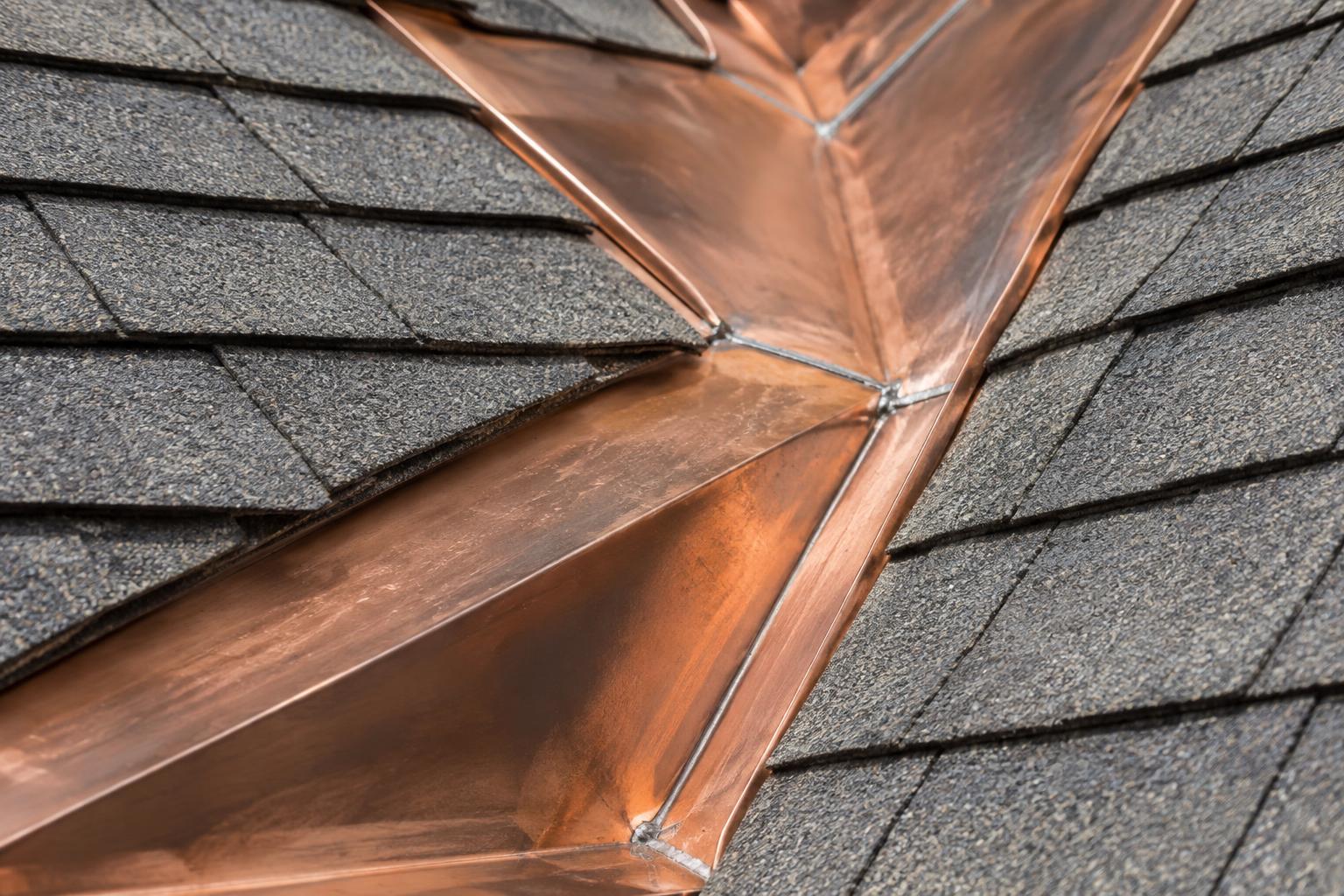
New Copper Installation on Bays, Porches and Standing Seam Sections
Not every copper job on a Cranberry Township home is a repair. Bay windows, dormer cheeks, porte-cocheres and porch roofs are frequently built or rebuilt in standing seam copper because the material handles low slopes and tight details better than shingle or slate ever will, and because it's what belongs on a house of that period.
We also install copper on additions and porch tie-ins where the goal is to match existing copper elsewhere on the house rather than transition to a different metal. Getting the seam spacing, pan width and patina expectation right up front avoids the mismatched look that shows up when two different contractors have worked on the same house over the years.
New copper is a real investment, and we price it by section rather than pretending it competes with asphalt on cost per square foot. What you're buying is a flashing system that will still be soldered tight when the roofing material around it has been replaced once or twice.
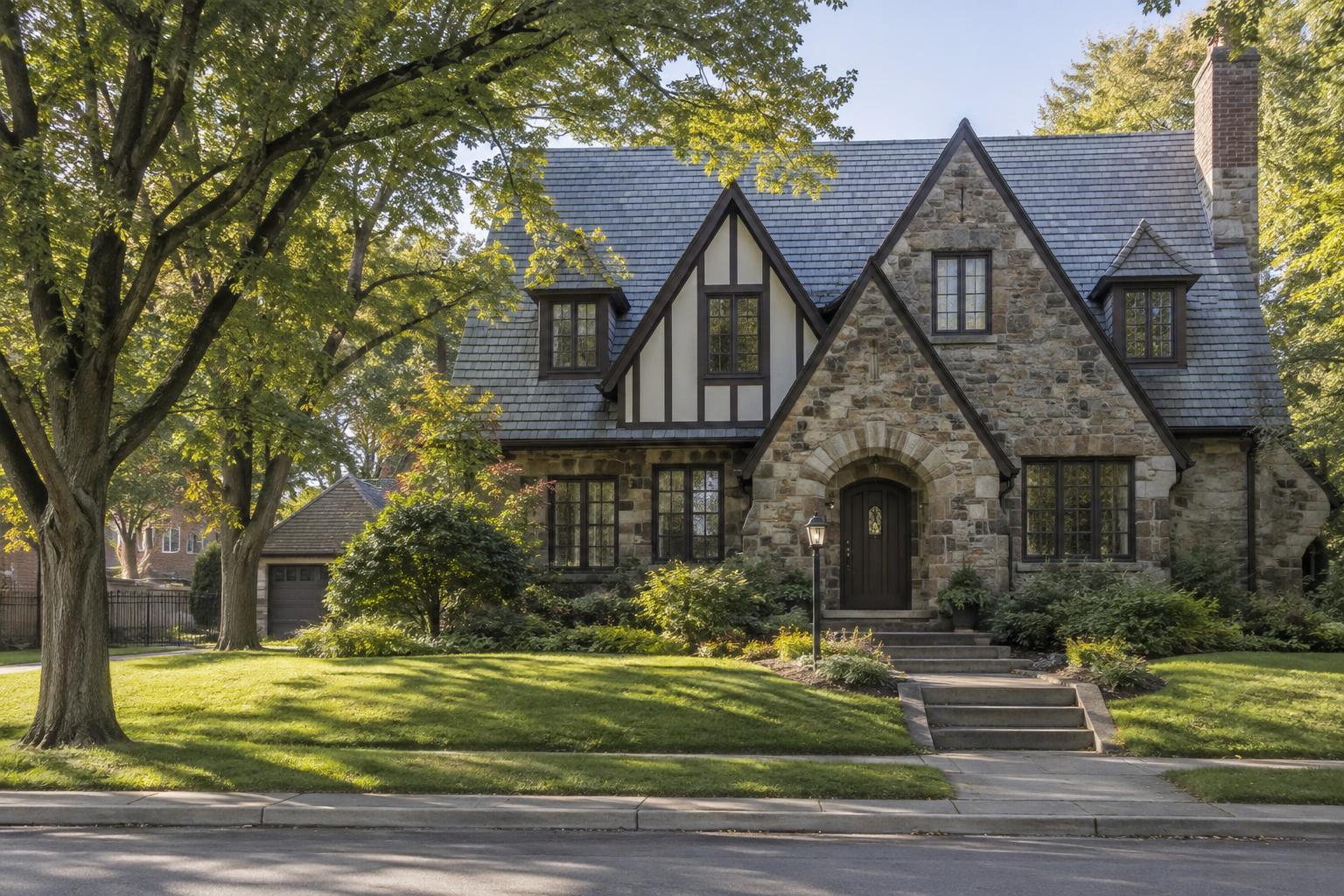
Copper Work and the older core of Cranberry Township
Properties in and around the older core of Cranberry Township can face review of visible exterior changes, and copper flashing details are often part of what makes a roofline read as original. We confirm the current review process with your specific municipality for your address before ordering material, since requirements aren't identical across Cranberry Township, Park Place and the townships.
In most cases, repairing or replacing copper in kind is the smoothest path because you're keeping the material the house was built with rather than introducing something new for a reviewer to weigh in on. We handle permits as part of the job once the material plan is settled.
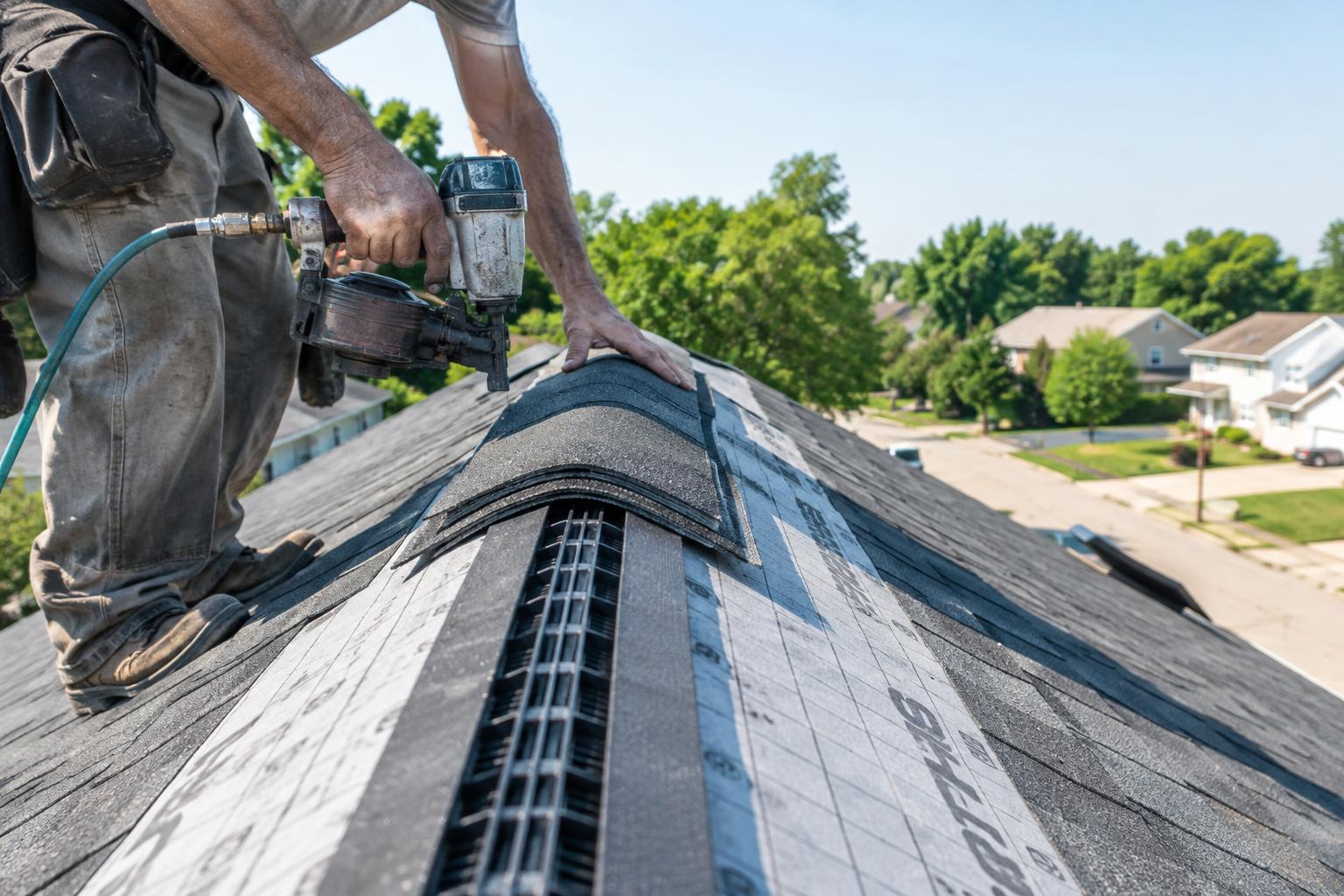
What We See on Cranberry Township Roofs
Cranberry Township is not a generic roofing market, and we do not quote it like one. Builder-Grade Replacement: 1990s–2000s plan roofs reaching end of life around the same time — we upgrade the spec. Ice Dam Correction: Butler County snow loads: extended membrane, soffit intake and attic air sealing. Permit Coordination: We confirm township permitting requirements before work starts and help coordinate the process.
Those conditions change how we spec copper roofing & flashing here. Fastening patterns, underlayment, flashing metal, ventilation: all of it gets picked for this housing stock instead of copied off a template. A few local landmarks show you why. UPMC Lemieux Sports Complex: A recognizable sports facility at the heart of Cranberry Woods. Graham Park: The township's flagship park, surrounded by plan-home neighborhoods. Cranberry Municipal Center: Township permitting requirements vary by project, and we confirm what's needed before work starts.
Because we run crews through Park Place, Whispering Woods, Fox Run, Ehrman Farms and the surrounding Butler County communities constantly, we already know which streets have plank decking, which plans have chronic valley problems, and which roofs were re-shingled over a failing layer instead of torn off.
Straight talkWe'd rather spend a morning in your attic finding the real leak than sell you a roof you don't need.
How We Do It In Cranberry Township
On-Roof Copper Assessment
We inspect every valley, pan, apron and seam up close, checking solder joints for cracking and looking for prior repairs done in the wrong material.
Interior & Attic Trace
We follow any stain back to its actual entry point and check decking condition around chimneys and valleys before quoting anything.
Written Scope & Copper Gauge
You get a written scope specifying copper gauge, which joints get soldered, and what stays versus what gets replaced — no verbal ballpark.
On-Site Fabrication
Valleys, pans and step flashing are formed to your roof's actual dimensions, not bent from a stock profile that doesn't fit.
Soldering & Seam Work
Every joint that needs to be watertight is fluxed, heated and soldered into a continuous seam — never caulked, never screwed.
Cleanup & Photo Documentation
Full site cleanup and magnet sweep, plus close-up photos of every soldered joint so you can see the work that's now hidden under the roof.
Materials & Options
16 oz Copper Sheet
Standard weight for step flashing, aprons and smaller valleys — durable and workable for most residential detail work.
20 oz Copper Sheet
Heavier gauge for main valleys, chimney pans and cricket saddles that see the most runoff and the most thermal movement.
Half-Round Copper Gutters
Fabricated on site to match existing profiles on historic Park Place and Cranberry Township homes, with round copper downspouts to match.
Standing Seam Copper Panels
For bay roofs, porches and dormer cheeks where copper is the historically correct and best-performing option for the slope.
Lead-Free Solder
Every structural seam is soldered rather than sealed, so joints stay watertight without relying on a caulk that degrades in a few seasons.
Ice-and-Water Membrane
Installed under new copper valleys and pans at eaves and penetrations as a backup layer, particularly on shaded slopes.
What It Costs In Cranberry Township, PA
Real ranges, published up front. Your written quote is exact — these are the bands Cranberry Township work actually lands in.
| Scope | Typical Range | Notes |
|---|
- Copper gauge and how many soldered joints the section actually requires.
- Access and staging — long private drives in Park Place versus tight village lots off Park Place.
- Existing decking condition under old copper, which is often original plank on 100-year-old homes.
- Whether patina matching against existing copper elsewhere on the house is required.
- How many penetrations, chimneys or transitions the roof section includes.
- Historic-district expectations that can rule out substitute metals entirely.
Copper Roofing & Flashing FAQs
Why is my copper flashing leaking if copper doesn't rust?
Copper sheet rarely fails, but solder joints and seams do, especially after decades of freeze-thaw cycling in Cranberry Township. Leaks also show up wherever a past repair used the wrong material — roofing cement, screws or aluminum patches — instead of soldering new copper into the existing system. We identify the actual failed joint rather than resealing the whole valley.
How much does copper roofing cost in Cranberry Township?
Copper is priced by the work involved rather than square footage, since it's hand-formed and soldered on site — gauge, how many joints, patina matching and access all move the number. A full bay window or dormer copper roof costs more than a single valley or pan repair. We give you a written, itemized quote after seeing the actual roof.
Can you repair copper flashing without replacing my whole roof?
Yes, and that's usually the right approach. Most copper failures we find on Cranberry Township homes are isolated to one valley, one chimney pan or one seam, not the entire flashing system. We rebuild the failed section in matching copper and leave the sound copper elsewhere on the roof alone.
Should copper flashing be soldered or caulked?
Soldered, always, for anything meant to stay watertight for decades. Caulk is a two-year fix on a copper seam; it traps moisture against the metal and accelerates corrosion once it fails. Every structural joint we form — valleys, pans, seams — is fluxed and soldered rather than sealed.
Can I mix aluminum flashing with existing copper on my roof?
It's not a good idea. Aluminum in contact with copper causes galvanic corrosion that quietly eats away at the aluminum over a few years, showing up later as an unexplained stain. If your home has original copper, we keep repairs in copper rather than introducing a different metal into the same water path.
Will copper roofing affect a the older core of Cranberry Township review?
Usually it helps rather than hurts, since copper is often the original material on reviewed properties. We confirm the current process with your municipality for your specific address before ordering material, and keeping the roof in copper generally keeps that conversation simpler than switching materials would.
How long does copper flashing actually last?
Well-formed and properly soldered copper can outlast the roofing material around it by decades, often reaching sixty to a hundred years before a valley or pan needs rebuilding. What fails first is usually a solder joint under repeated thermal stress, not the copper sheet itself, which is why targeted repair is often all that's needed.
How much is a roof replacement in Cranberry Township?
It depends on square footage, pitch and roofline complexity. We give a free, written, itemized quote after inspecting the roof in person.
Why does my Cranberry roof keep getting ice dams?
Almost always inadequate soffit intake plus warm air leaking into the attic. Adding more insulation alone won't fix it — we correct the ventilation path and extend the ice-and-water membrane at the eaves.
Do you pull the permit in Cranberry?
Permitting requirements vary by municipality and project. We confirm what's needed and help coordinate it as part of the job.
Where We Do This Work
Copper Roofing & Flashing across Cranberry Township — every neighborhood in the 16066 ZIP. See everything we do in Cranberry Township, PA.
Related Cranberry Township Services
Get a Free Cranberry Township Inspection
We climb it, photograph it, and hand you a written scope. No pressure, no ballpark guesses.